
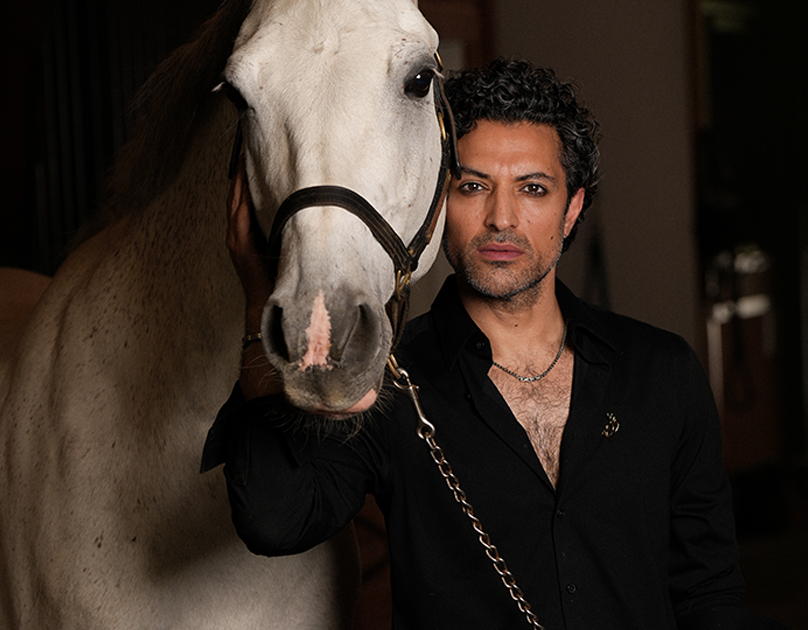
For Ashkan Khatibi, art began long before it became a profession. Raised in a family where literature, music, painting and cinema were deeply valued, he encountered stories before the age of two, began learning piano as a child and discovered theatre while still in school. By 17, he was studying art at university. Less than a year later, he was performing professionally on stage, and soon after, receiving recognition for his acting.
It was the beginning of a career that would move fluidly across theatre, music, writing and film. But in Khatibi’s telling, the story of the artist cannot be separated from the story of the country in which that artist was formed.
Years of restrictions, censorship and political pressure gradually altered his relationship with both Iran and his work. He describes being detained outside his home, subjected to violent interrogation and confronted with a series of accusations related to his political expression. After further interrogations by different authorities, he came to a conclusion he had resisted for decades: remaining in Iran was no longer possible.
Leaving, however, did not mean leaving his identity behind.
In Italy, Khatibi found the space to continue working as an artist. He composed music, wrote screenplays and plays, produced theatre, made short films and worked on documentaries. What he describes is not simply the continuation of a career in another country, but the rediscovery of what creative freedom can feel like after years of restriction.
Yet exile also changed the purpose of the work.
Khatibi speaks about theatre with near-sacred reverence. For him, it is a concentrated expression of life itself. But there is one thing, he says, that stands above it: human life.
That distinction has become central to the way he now understands his role as an artist. Art remains essential, but no longer as an isolated pursuit of artistic achievement. It has become a means of participation, connection and resistance. He still insists on quality and on respecting the audience, but the work now exists within a larger moral framework.
That commitment has extended far beyond the stage. Khatibi describes raising funds and coordinating support for Iranians injured during protests, including people requiring urgent and long-term medical treatment. What began through personal networks grew into a wider effort involving supporters outside Iran. The work, he acknowledges, has been exhausting, financially demanding and often overwhelming. Still, he speaks about it not as charity, but as responsibility.
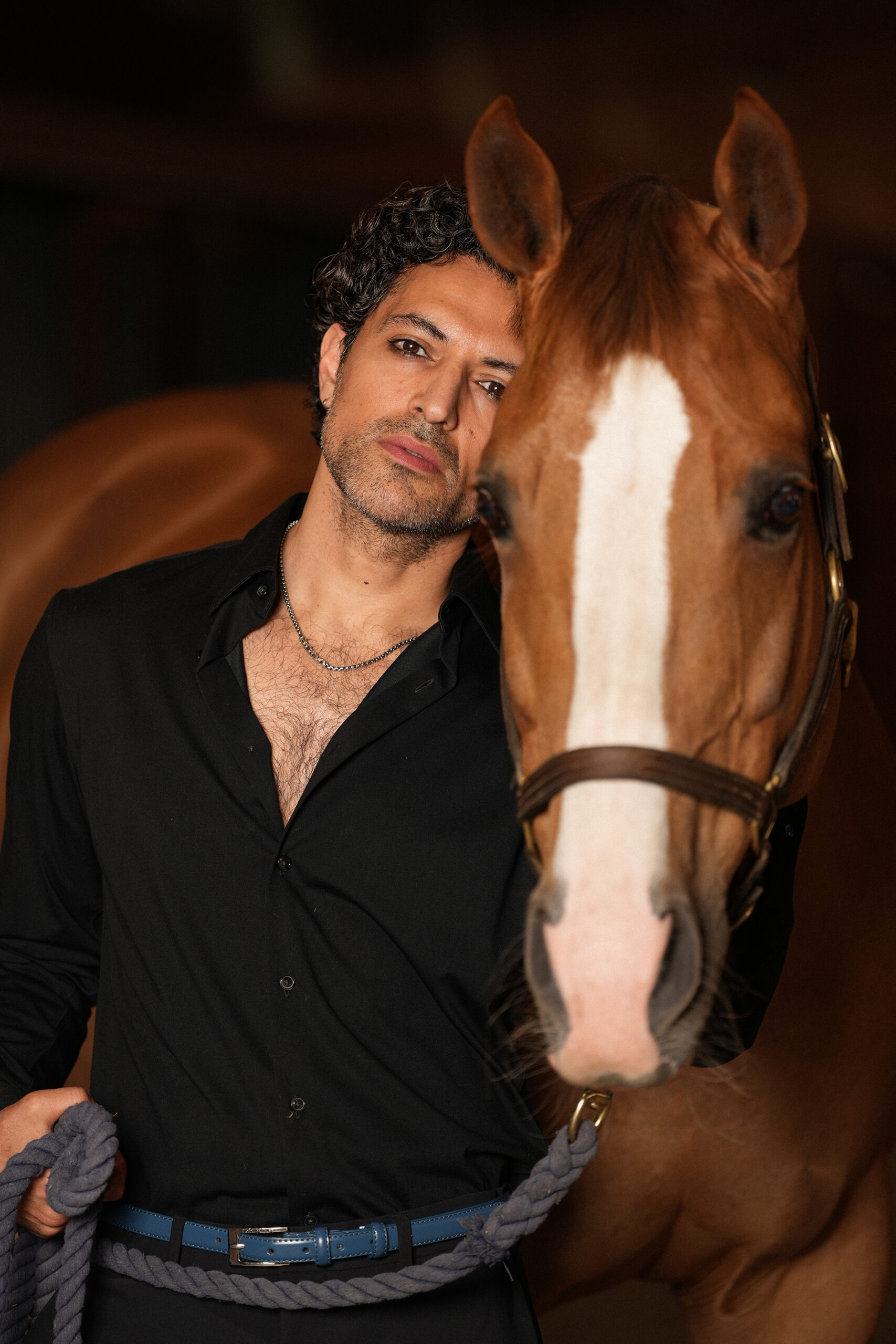
Outfit Courtesy of Holt Renfrew Vancouver
Shirt & Pants Theory
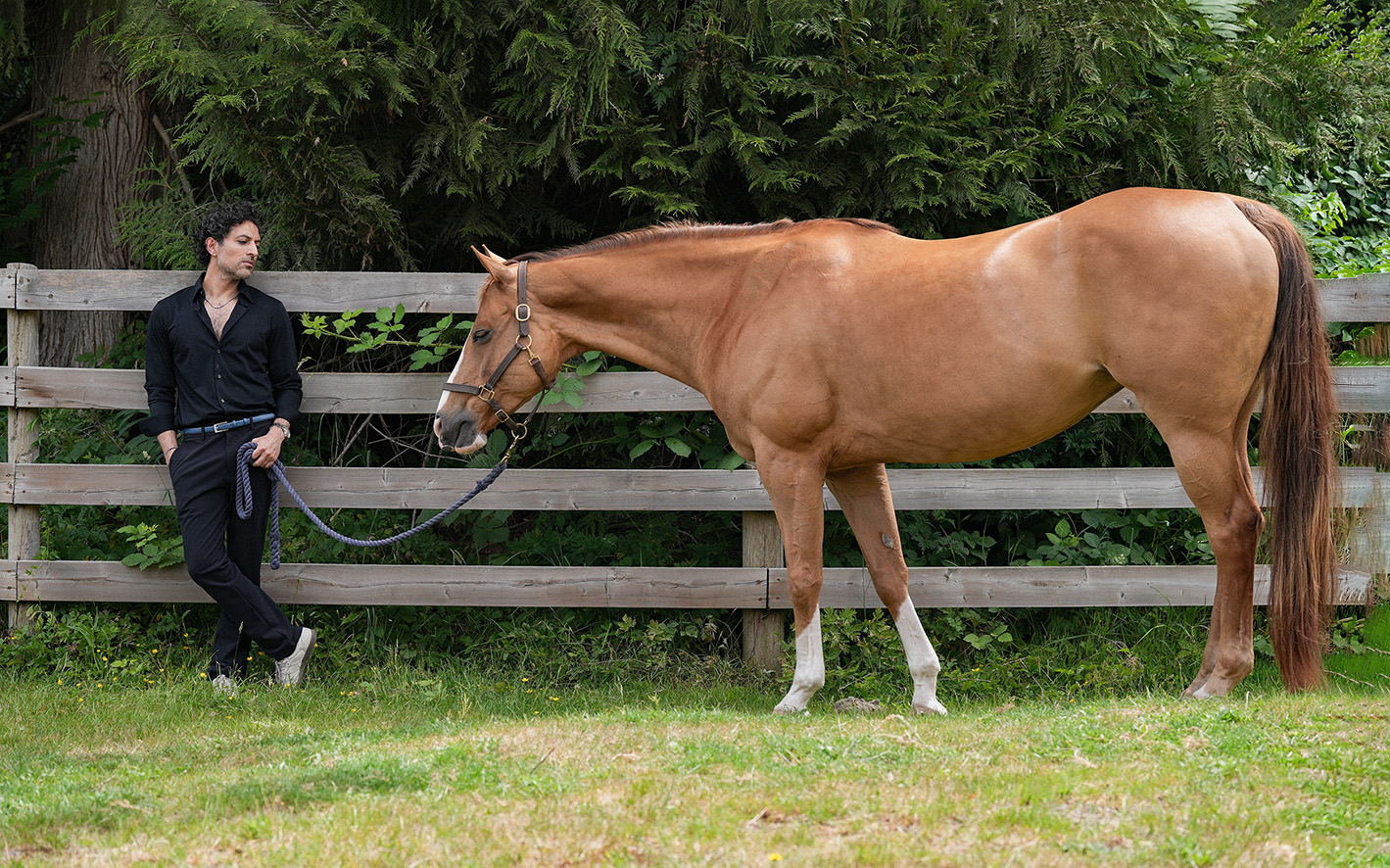
“The only thing that makes me happy is to understand and believe that we have moved one step closer to freedom.”
The same shift can be heard when he talks about teaching. Once, the ambition may have been to train exceptional actors. Today, he says, helping younger artists preserve their hope and desire to live can matter even more.
And yet theatre continues.
His productions have travelled through Italy, Europe and Canada, where performances took on a different emotional weight in front of large Iranian audiences. He describes the collective response as unlike anything he had experienced in more than three decades on stage. The performance was no longer simply a performance. The room carried memory, grief, displacement and a shared longing for a different future.
That experience is also shaping his new work, including a bilingual Italian-Persian play inspired by the life of an Iranian woman and centred on the experience of Iranian women. It is another example of the place where Khatibi now seems most comfortable creatively: where private stories meet collective history.
Throughout the conversation, he is wary of being turned into a hero. He rejects the culture of easy labels and repeatedly redirects attention toward those who have faced far greater risks inside Iran. Courage, in his view, is not an exceptional quality belonging to a few people. It can spread. It can be learned from others.
Perhaps that is the clearest way to understand the Ashkan Khatibi who emerges from this conversation. The artist is still there, deeply committed to theatre, creation and teaching. But ambition has changed shape.
Once, he says, he imagined being remembered in the history of theatre as a great acting teacher. Today, that matters far less.
What matters is reaching the end knowing he did what he could.
For Khatibi, freedom is no longer an abstract political idea or a distant destination. It has become the measure against which almost everything else is judged, including art itself. And for an artist who has spent his life on the stage, perhaps the most consequential role is now the one he has chosen beyond it.