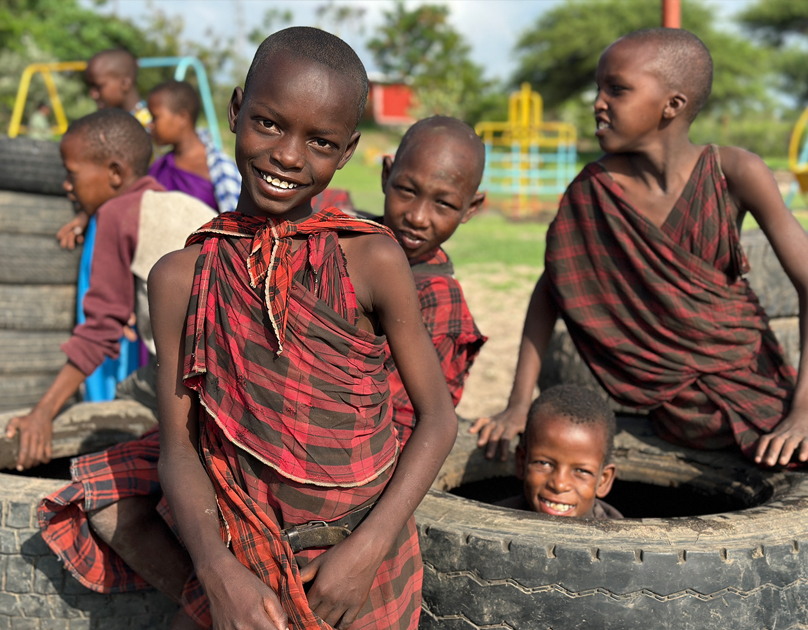
In places where life has demanded too much of children too soon, play is often the first thing to disappear. Not because children stop needing it, but because the world around them becomes unsafe, unstable, or simply too scarce to allow it. The Power of Play exists to bring play back where it has been taken away. Built on the belief that play is a universal right and a direct path to healing, the charity creates sustainable play spaces for children in underserved, marginalized, and hard-to-reach communities, helping them recover from trauma and reconnect with childhood wonder.
When hardship steals childhood
For many children, hardship does not only remove comfort or stability, it interrupts development. A safe space to play is not a luxury in a child’s life. It is where confidence forms, where social bonds begin, where the nervous system learns safety, and where imagination becomes a coping skill. The Power of Play is built around a clear idea: healing happens through connection, and play is one of the most natural ways children reconnect to themselves and to each other.
The communities the organization serves are often the ones that global systems overlook: orphanages, refugee camps and conflict zones, Indigenous communities facing systemic poverty, and marginalized neighbourhoods with limited social protection and few safe spaces for children.
A founder’s story rooted in survival and purpose
The organization was founded in 2016 by Reza Marvasti, whose life shifted after a near-death experience forced him to re-evaluate what “aliveness” truly means. That inner turning point deepened during an expedition through South America, where he witnessed the daily reality of poverty in villages across Ecuador, Guatemala, and Bolivia, and saw children growing up without safe spaces to simply be kids.
Out of that experience, The Power of Play was born, not as a construction project, but as a global movement to reclaim childhood through safe, community-led play spaces.
Impact that is measurable, & felt
Numbers can never capture the full weight of what it means for a child to have a place to play again, but they do show scale. To date, The Power of Play has built 57 playgrounds across 18 countries, reaching 63,880+ children.
Those playgrounds do not exist in isolation. The organization intentionally integrates play spaces into broader community programs focused on child development, education, trauma recovery, and social equity. This is why partnership is central to their model: when they collaborate with educators, community leaders, NGOs, and local change-makers already .
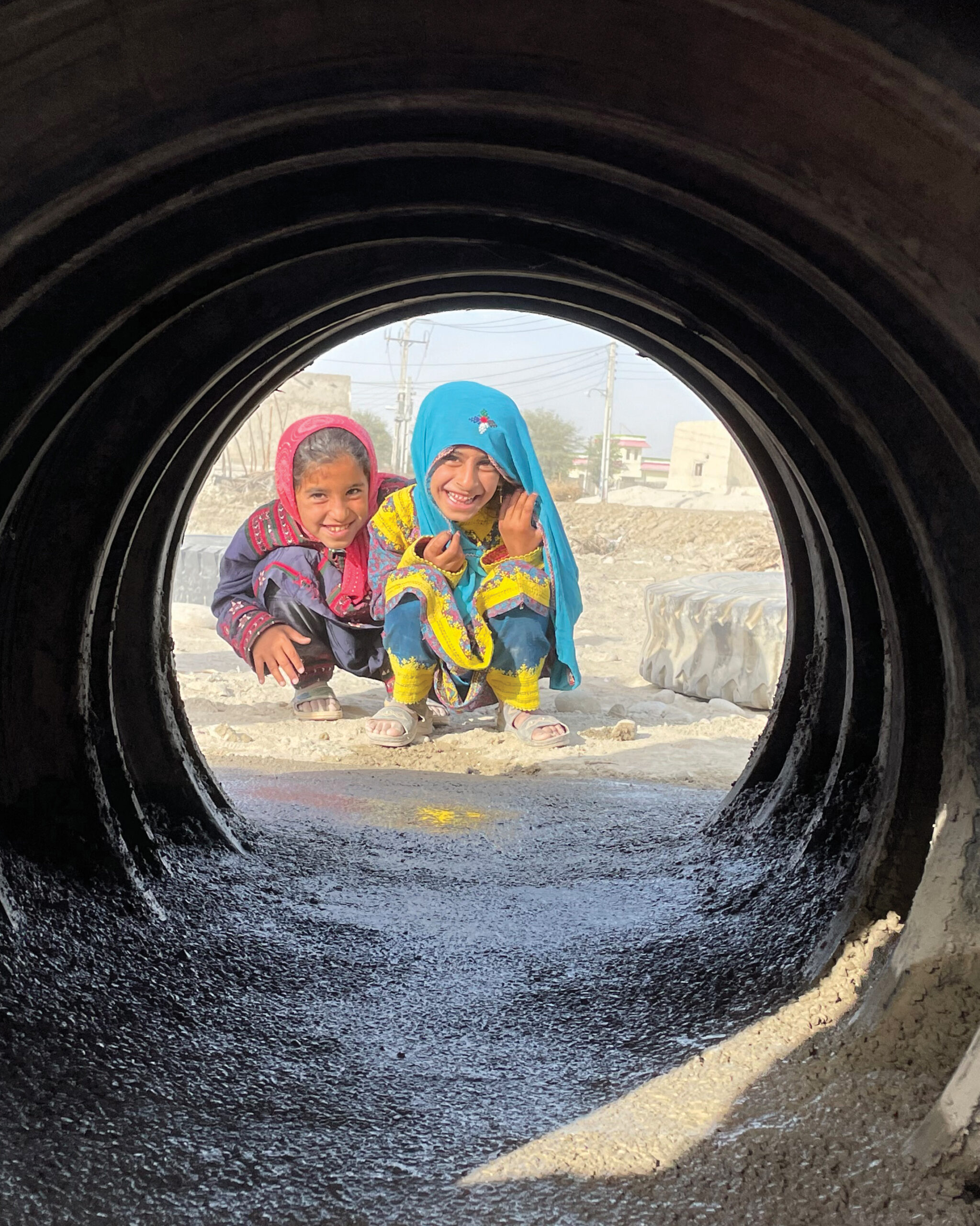
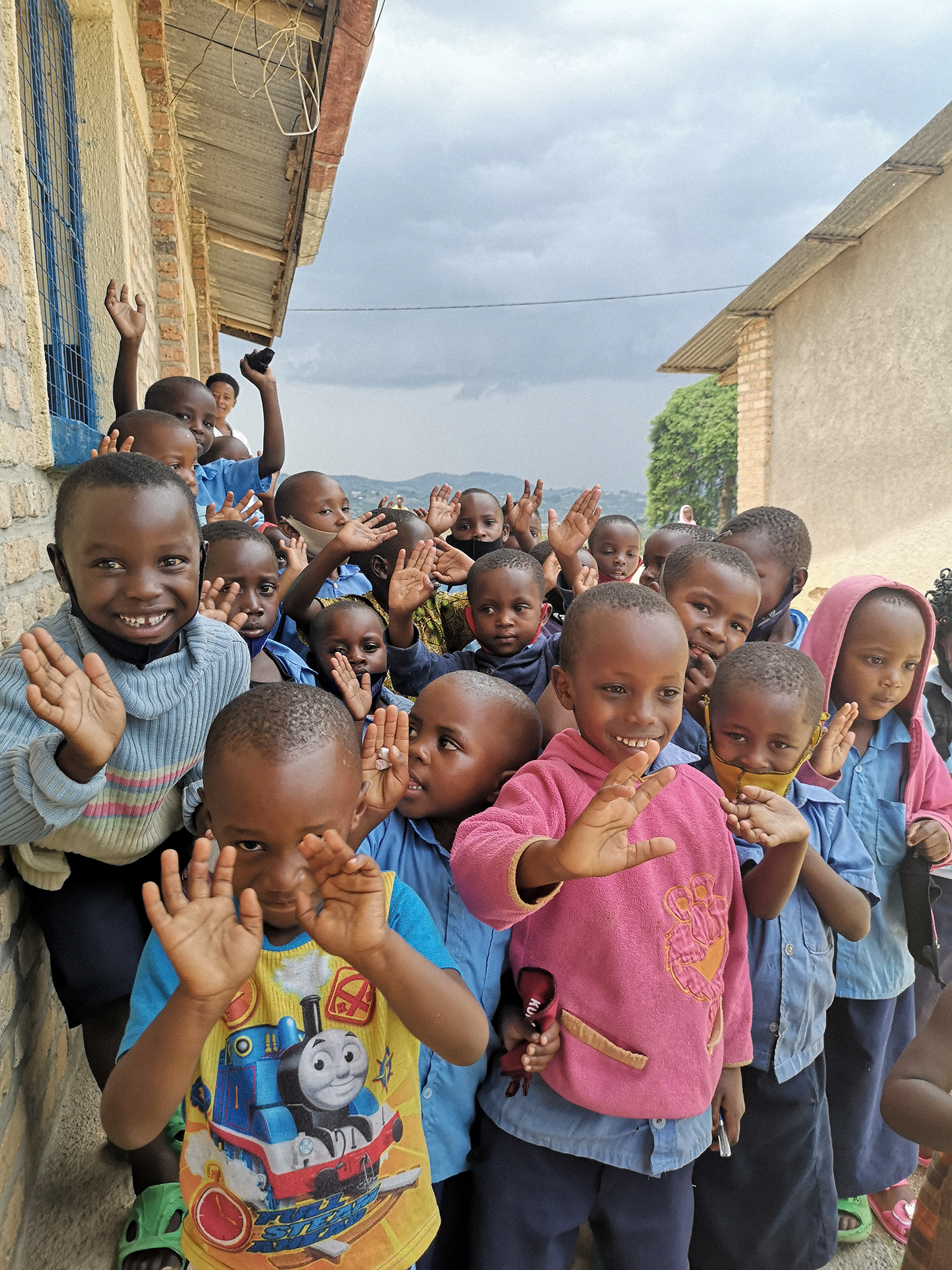
Gazani village, Sistan Balochistan, Iran — 270 children
“Sustainability isn’t a layer. It’s the ethic.”
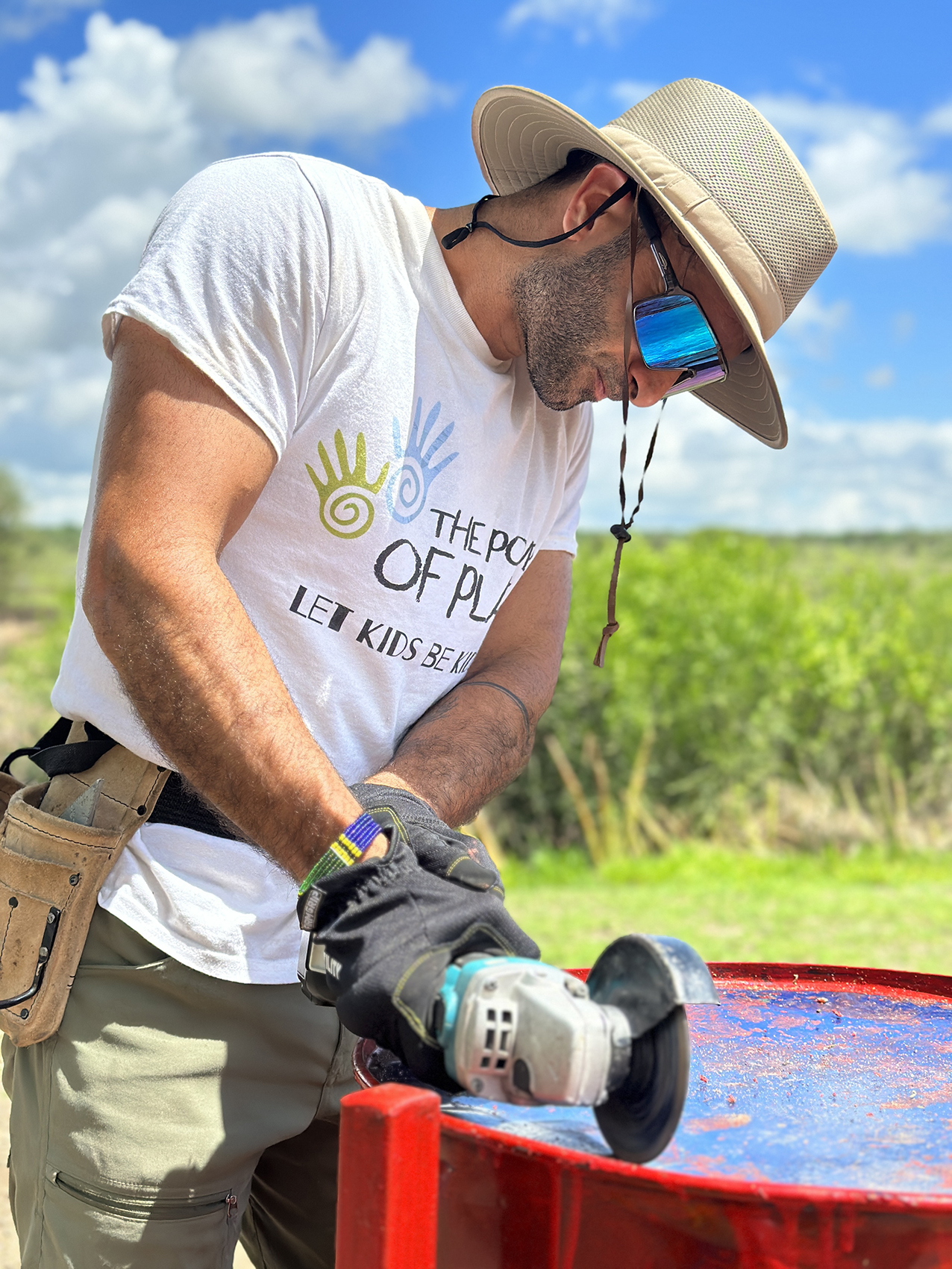
Reza Marvasti, the founder of The Power of Play,
upcycling a industrial drum to playground equipment
“What has been discarded becomes a structure of joy.”
From waste to wonder
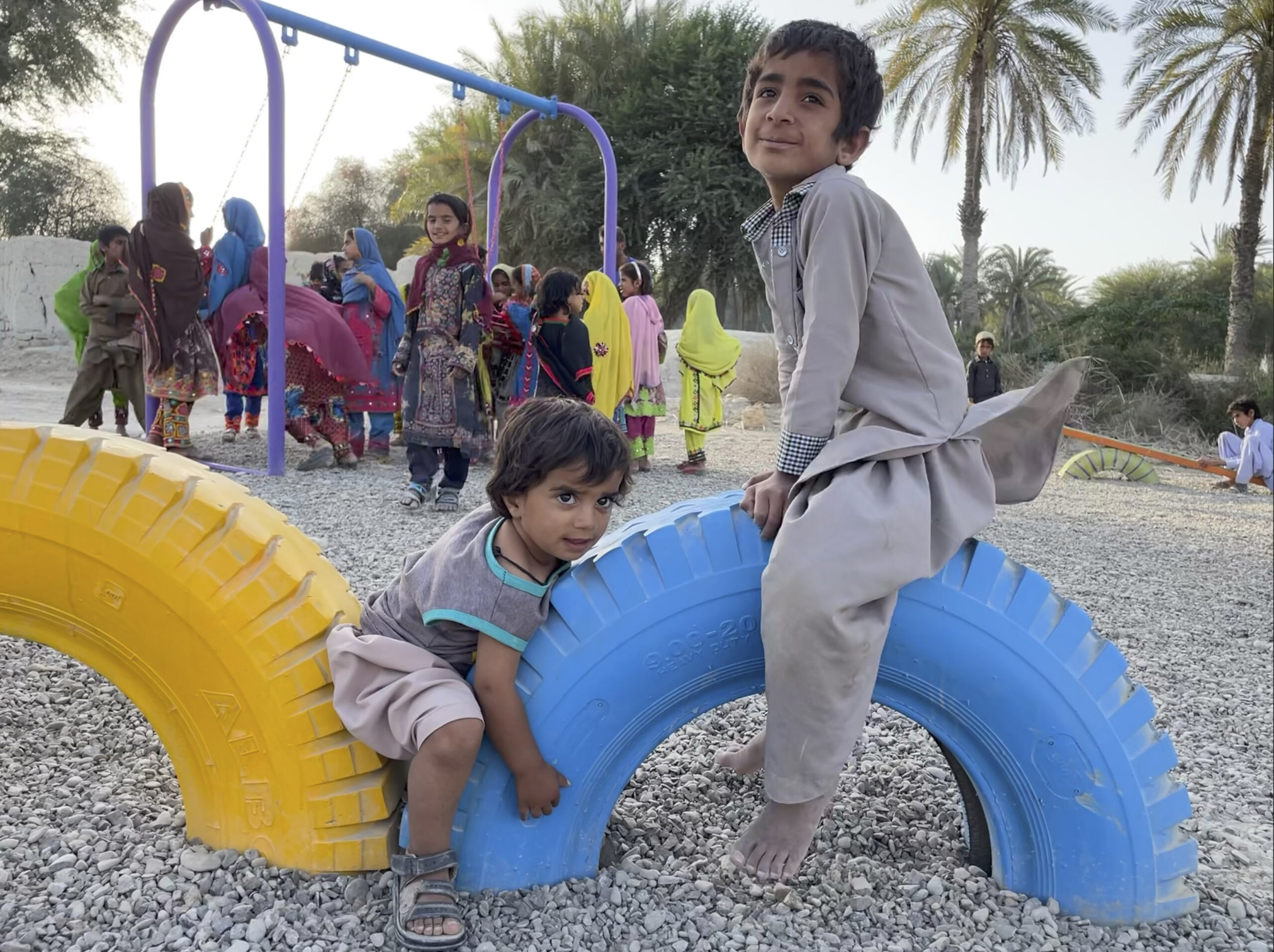
Sustainability is not treated as a marketing layer. It is part of the ethic. In fact, 52% of The Power of Play’s playgrounds are built from upcycled materials, thoughtfully sourced and adapted to local environments.
Rather than importing expensive equipment that may be difficult to maintain in remote or economically challenged regions, the organization transforms what has been discarded into structures of joy and belonging, often creating spaces that can last for a decade before major repairs are needed.
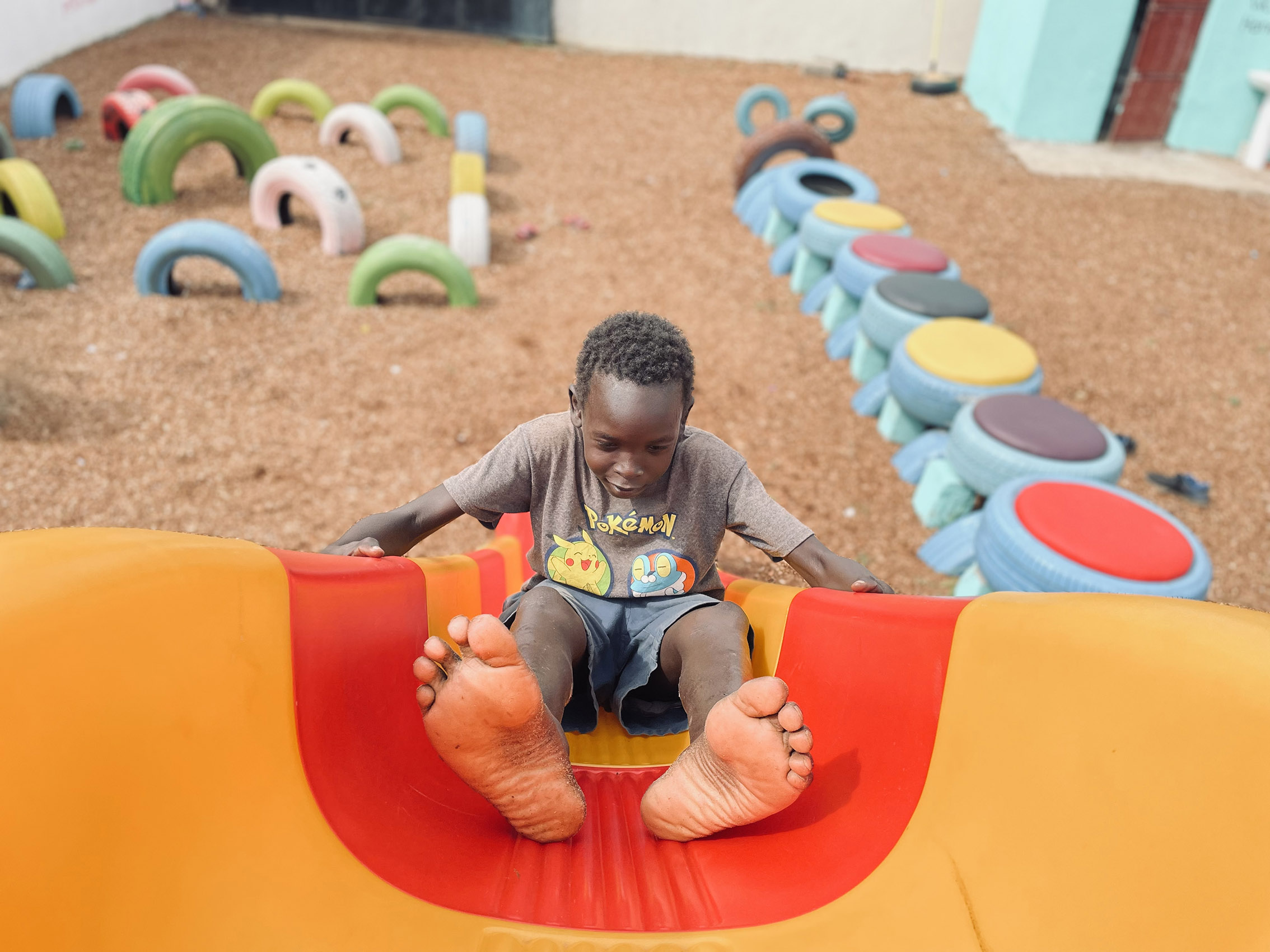
The scale of that transformation is striking. More than 14,200 recycled tires have been turned into climbing elements, borders, and playful forms that children can touch, jump on, and invent with. Metal is salvaged from old car parts, broken machinery, scaffolding, and furniture, reshaped into durable playground features. Timber is reclaimed from donated wood, fallen trees, and salvaged trunks, then treated for safe use in structures that are both sturdy and inviting.
Even used playground parts are rescued from parks and schools and given a second life where they are needed most. What makes this approach so powerful is not only its environmental logic, but its message: in communities where children are surrounded by hardship, the act of turning the overlooked into something beautiful quietly proves that transformation is possible.
“Design with empathy can change lives without taking dignity.”
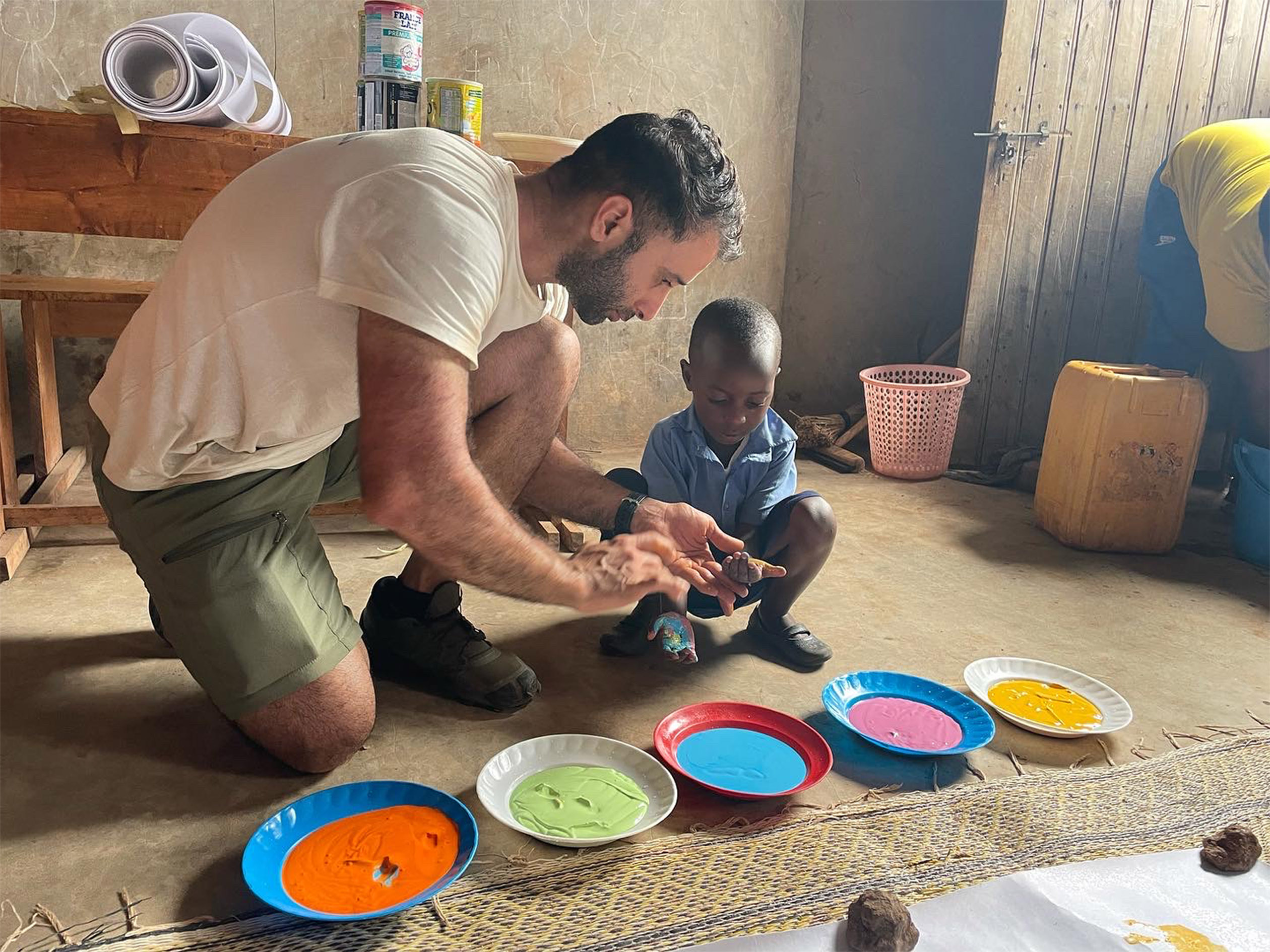
Low incomes school in Sheli village, Rwanda. Children doing handprints on canvas — 1260 students
Kids imagine, we build
The build process is designed to be collaborative and dignity-preserving, not top-down. The organization works with communities to assess needs and sites, mobilize local support, and involve children directly in imagining their dream playground through sketches, painting, and models. Those ideas become real design plans, and fundraising partners receive design sketches created by local children, connecting donors to the imagination they are helping bring to life.
Construction itself becomes another form of impact: local volunteers are recruited and trained, creating life skills and new opportunities that outlast the build day. And when the playground opens, it is inaugurated with the community, fundraisers, and the children who inspired it, as a shared celebration rather than a delivered product.
“Because play is not a privilege. It is a right.”
A five-year university movement
Over the past five years, The Power of Play has run three programs with four universities, and something unexpected has become one of its most meaningful outcomes: the transformation of students themselves.
Beyond the impact on children and communities, these programs have shown young designers and researchers what it means to use education as a tool for real-world change. And for the children, there is a different kind of empowerment in knowing that students and universities across the globe are standing with them and supporting their mental and emotional well-being.
Sensory and science-based playground design
In collaboration with Emily Carr University of Art + Design and Guangdong University of Technology, this program asks students to step beyond the typical conceptual studio and into a practice rooted in empathy and global impact.
Guided by educator Christian Blyt, students designing a sensory playground for an orphanage serving deaf-blind children are asked to temporarily block their own sight and hearing. The goal is to expand awareness of how play can be experienced through texture, vibration, scent, and spatial intuition.
What begins as an exercise in perception becomes a shift in purpose: students discover compassionate design as a tool for inclusion. Over five years, this collaboration has deepened global understanding and shown emerging designers that thoughtful play can change lives without diminishing anyone’s dignity.
Interactive objects for children affected by war
A second program, developed with University of British Columbia alongside Emily Carr, supports the healing of children living with the emotional impact of war. Students from industrial design and psychology collaborate to create interactive objects that blend colour, sound, movement, and tactile engagement, tools that help young survivors process trauma through play. It is an intersection of creativity and resilience, where students learn that design can restore agency and offer moments of joy to children who have endured the unimaginable.
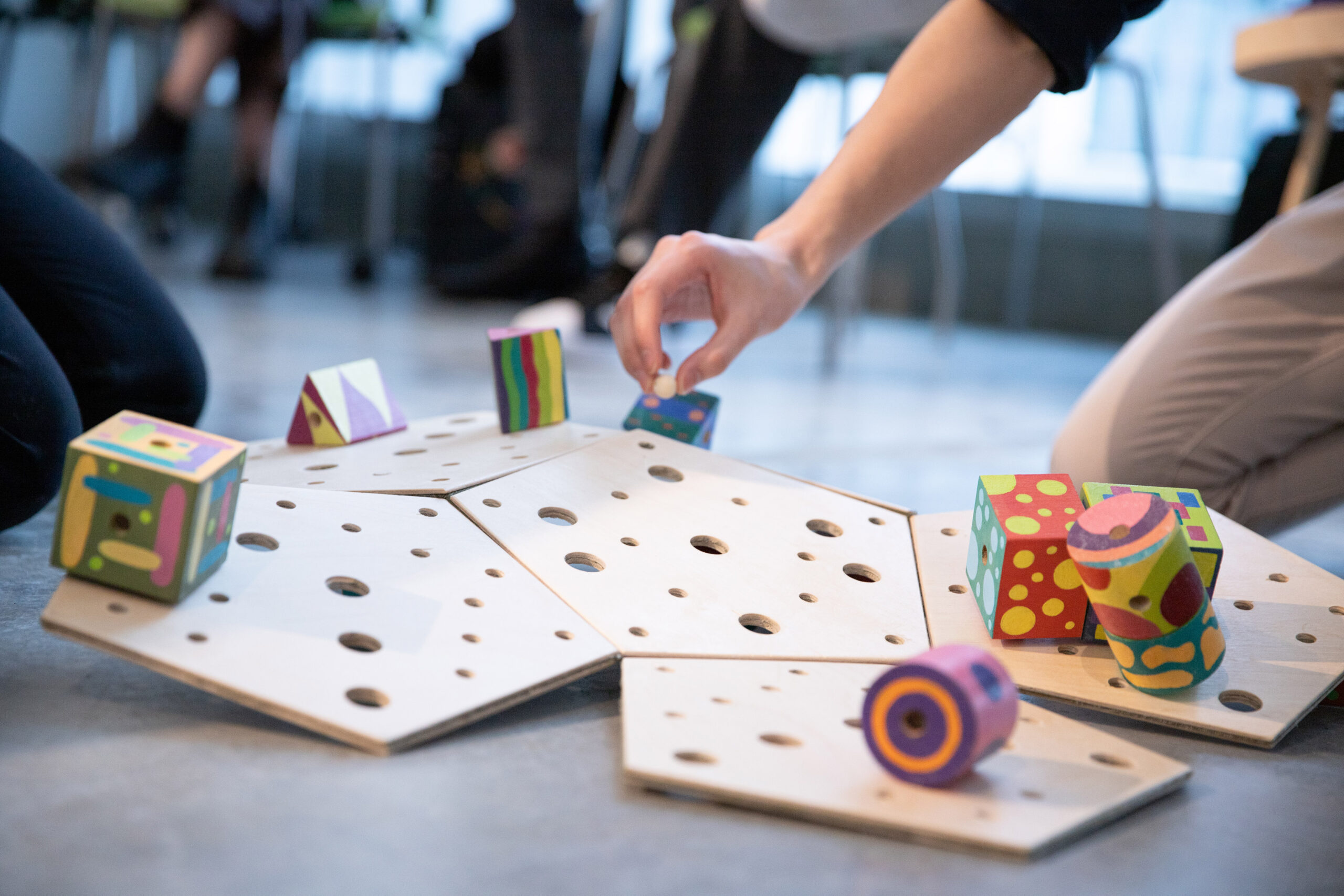
Interactive Objects for Children Affected by War — ECUAD & UBC
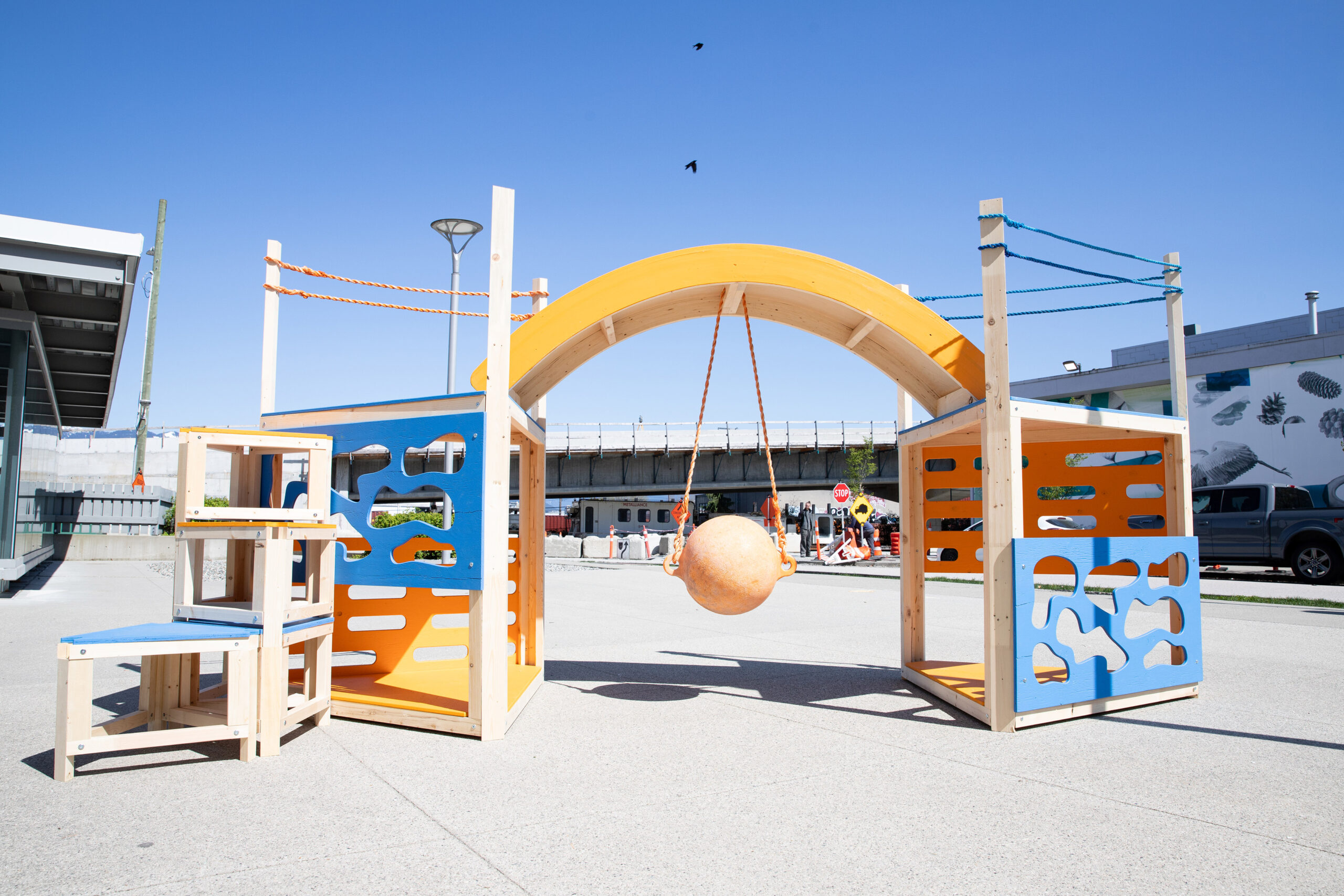
Play^Scape — ECUAD & Tongji University
Play^Scape
The third program, created with Tongji University and Emily Carr, reimagines the playground as a living system.
Play^Scape is a modular environment that children can build, rebuild, and reinvent, turning imagination into structure and creativity into motion. The program supports young designers exploring autonomy, collaboration, and open-ended play, and it gives children something rare: not just a place to play, but the power to shape their own world.
United by purpose, empowered by play
The Power of Play’s work is proof that a playground is never just a playground. It is an invitation back into community, a visible act of care, and a structure that makes joy possible again.
In a world that often asks children to adapt to circumstances they never chose, the organization offers something quietly radical: a safe space where they can simply be children, and where healing can begin in the most natural language they know.