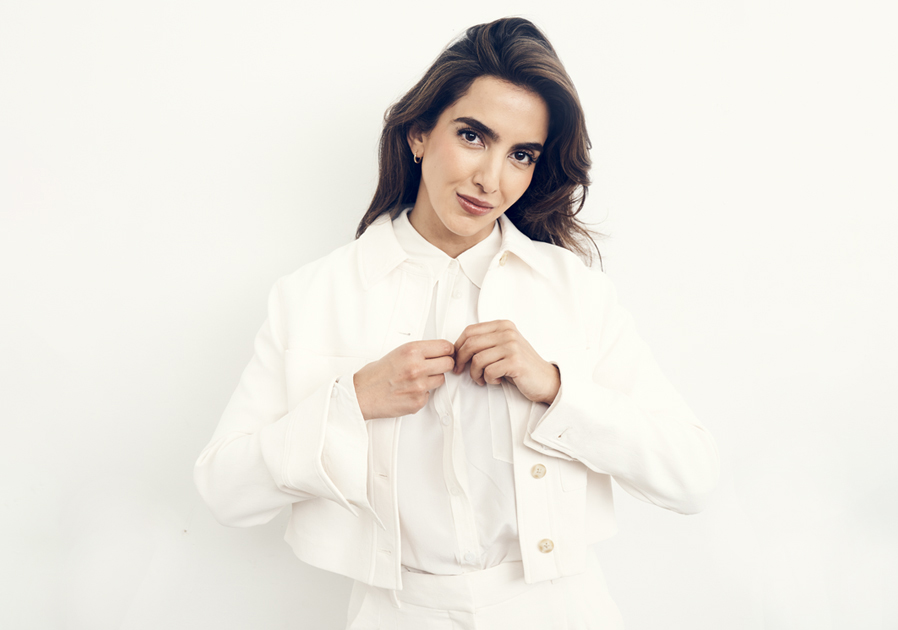
Sara Seyed is a distinguished actor, award-winning producer, and Harvard-trained creative entrepreneur whose path arcs from the Moscow Art Theatre to Netflix, Sundance, MoMA, and the United Nations. A former human-rights lawyer, she bridges art, advocacy, and innovation, with acclaimed projects reaching millions worldwide. Her TED Talk debuted top-three globally; her films have broken box-office records and won at SXSW and TIFF. As co-founder of Klippd, she pioneers live first human only media where authenticity becomes currency.
Read our exclusive interview with Sara in this issue of Aleph Magazine, where she reflects on her journey, her advocacy, and the future she envisions.
JOURNEY
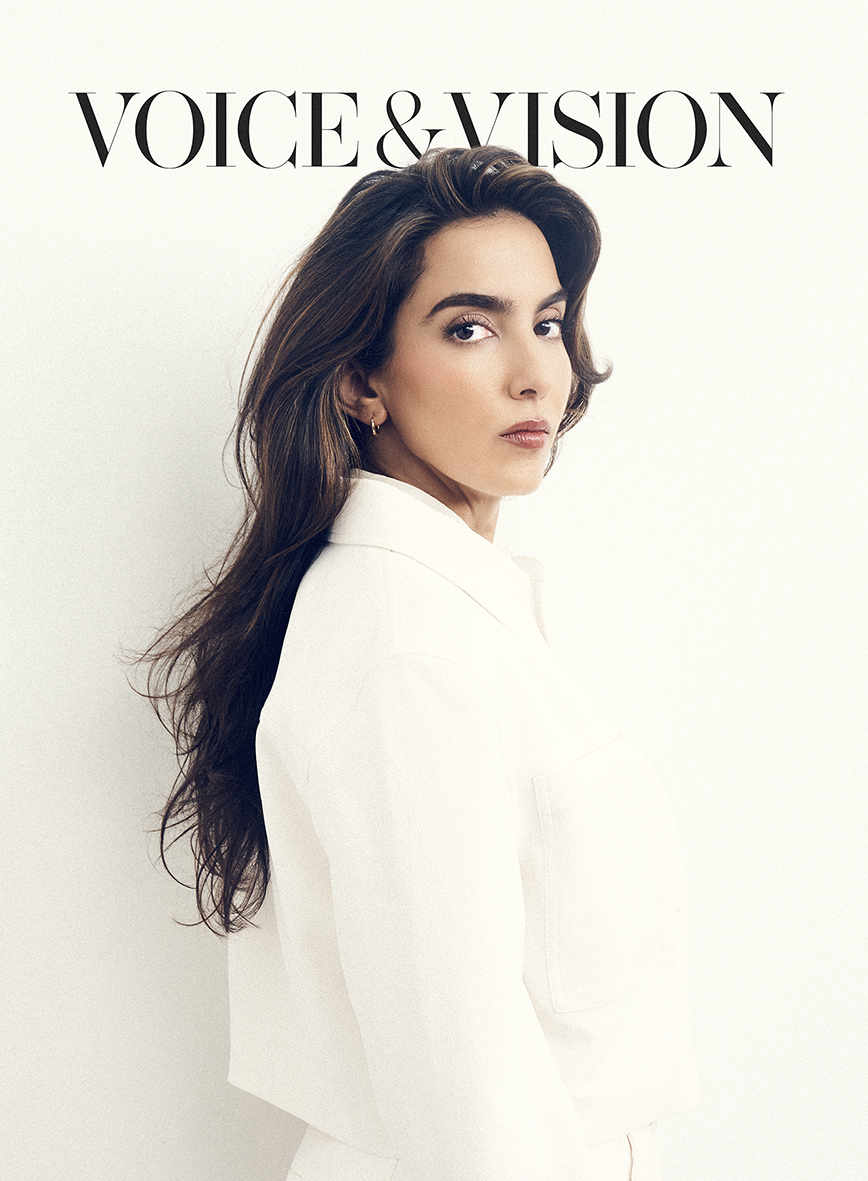
SARA SEYED - Actor, Producer, Entrepreneur & Human Rights lawyer
Photos by Shayan Asgharnia
“I became an artist because it ignited the deepest sense of vocation, to engage socially, politically, heart and soul, in the kind of storytelling that helps us understand each other better.”
How did your background, education, and experiences shape who you are today?
That depends on who I am today. Quite frankly, I’m still figuring that out. I’ve only just begun to scratch the surface by finally asking the right questions.
Like.. am I getting closer to becoming someone I respect? I believe our answers can only live up to the quality of our questions, and I only pray I never stop becoming. Iris Murdoch calls it the “process of unselfing.” I love that. Reinvention is how we become who we are meant to be. I’m just starting.
My life’s map is filled with beautiful people and random events. Chapter one is growing up in Iran. We Iranian kids from the ’80s had a lot of status quo force-fed to us; culturally, politically, socially, familially. A lot of structure that wasn’t exactly ergonomic for creative, free-spirited types. Which, honestly, was most of my generation.
I joked about it on the TED stage to a crowd of foreigners: I was thirteen the first time I got into trouble for being myself. My “crime”? Dancing to Michael Jackson in the schoolyard. Years later I was arrested again, for the same crime, to the same song. I asked the audience, any guesses? I’m “BAD” hahah! The crowd went half silent, half laughing. How do you summarize the paradoxes that shape us into these foreign creatures?”
Most Iranian kids grew up with the usual Friday morning anti-West chants, but my school took it to the next level. By seventh grade we were forced to wear the chador, attend group prayers, and sit through fatwa style lectures, which I obviously dodged with Mission Impossible-level tact. My mum loved to call it the “genius people’s school,” to feel less guilty l about what we had to endure. lol.
I still remember walking into school after my mustache-threading ceremony. I knew it was naughty. I knew it would end badly. But when my hairy friends looked at me like WOW (Gregorian chants soundtrack), it was worth it for that one moment of glory. Good Muslim girls weren’t supposed to be objects of affection. Our mustaches were “the pride of the nation.” War veterans came in to tell us how they’d lost a leg or a testicle preserving that honor. And Persian girls? We’re hairy mofos (oh, sorry, can’t cuss). We grow mustaches before breasts.
“SEYED, COME HERE!” The headmistress inspected my missing fuzz with a magnifier and summoned me into a room with mummified guardians of the underworld whispering and pointing at my lip line. Comical in hindsight, yes. But for a girl just coming into her femininity, it was humiliating. Their solution? Grow it back… hahah ! My mother, queen strategist, diffused the scandal by saying I had permanently lasered it. And that wasn’t even close to the biggest hurdle we faced growing up.
When you have to fight for every ounce of identity, even in the mundane, you grow a rebellion under your skin. We weren’t just trapped by dress codes, but by expectations from every angle: political, social, familial. To hold a crush’s hand, read a banned book, watch a forbidden film, each tiny act cost us. The price of just being. And yet, I wouldn’t trade growing up in Iran: the warmth of family, bonds of friendship, secret crush rendezvous in Fereshteh, wild parties in Shemshak, trips to Shomal, teachers slipping us contraband literature. Those weren’t just memories; that was my first school of life.
No one does joy like Iranians. No one does grief like us either. I beam with pride seeing kids slay concerts, strut in markets, snag gold at AI competitions, content so brilliant it makes me grin hard. And yet, generations of youth with staggering potential are forced to wrestle with Stone Age rules and incompetent, brutal governance. The real tragedy is watching all that brilliance held back. Nothing paints that arc more clearly than Iranian cinema: artists forced to migrate at their peak, those suffocated by censorship, those silenced entirely.
Dictatorships always target artists first, the creative spirit. Our prisons are filled with them. Art is a disruptive force, and I hope to master against all forms of oppression.
How did your education shape you? Education took me from Tehran to UCL, LSE, SOAS, and Harvard. But it was idealism, and yes, naïveté, that carried me. I truly believed I’d go back and be the first female president of Iran. It still makes me laugh. Law taught me that systems need upgrading, political, social, cultural. Immigration gave me worldview and celebration of otherness. Iran taught me resistance is a lifelong duty. Theatre gave me the language of storytelling to transform and reveal. Cinema taught me democracy, for it unblinds us to each other’s realities.
Somewhere between international institutions, film sets, stages, and boardrooms, I became someone who can no longer separate her biography from her battle. And now, I hope to forge a new path as an entrepreneur and as an artist, and maybe just maybe help us elect the first female President in Iran. You never know.
VOICE
What moments or turning points inspired you to speak up for justice, human rights, and women’s equality?
There wasn’t a single incident, and it wasn’t a meditated, conscious choice. I was sent to Vozara more than I can remember. I was arrested in front of the Iranian Embassy in London after the elections. During the Green Movement I watched a young guy get shot. I heard Mr. Karami beg for his son’s life and spoke to him. Then I was banned from returning home. Inspiration had very little to do with it. I didn’t choose activism; silence just never sat well on me. It was more like what my Russian teacher said: “If not you, who Sara ? And if not now, when?” I just threw myself in the mix, aware that people before me lost more than I likely ever will. I don’t have more to lose than anyone else.
I think of Kinnush: “Life owes me a homeland, one where I can think of living and not of homeland.” Its just Loaded, heartbreaking and honest. I’m not only speaking up for myself and my vote. I’m indebted to the ones who made the ultimate sacrifice. I’m fighting for the vote he never got to cast, the life he never got to live.
Sometimes I joke that I became a revolutionary by accident, but maybe rebellion was always my mother tongue. It came at a cost, one I’m still reeling from after almost two decades away. Do I regret the choices that led to my… exile? Never. Am I not heartbroken by it every single day? You tell me.
I’ve hear heart breaking stuff all the time: “What a shame you can’t come back; your talents are wasted.” “You’d be breaking box-office records in Iran.” “I wish we could work together.” “I wish you hadn’t gone so overboard.”
Moral posturing just isn’t my thing. I can’t post condemnations on social media and then fly back to Iran to party like it’s no one’s business. Kudos to those who can. The biggest lesson conservatory acting taught me is this: it’s not pretending, it’s living truthfully, even in imaginary circumstances. I carry that motto into my activism and my work, whether as an artist or an entrepreneur. If you want to leave a dent, you’ve got to be all in.
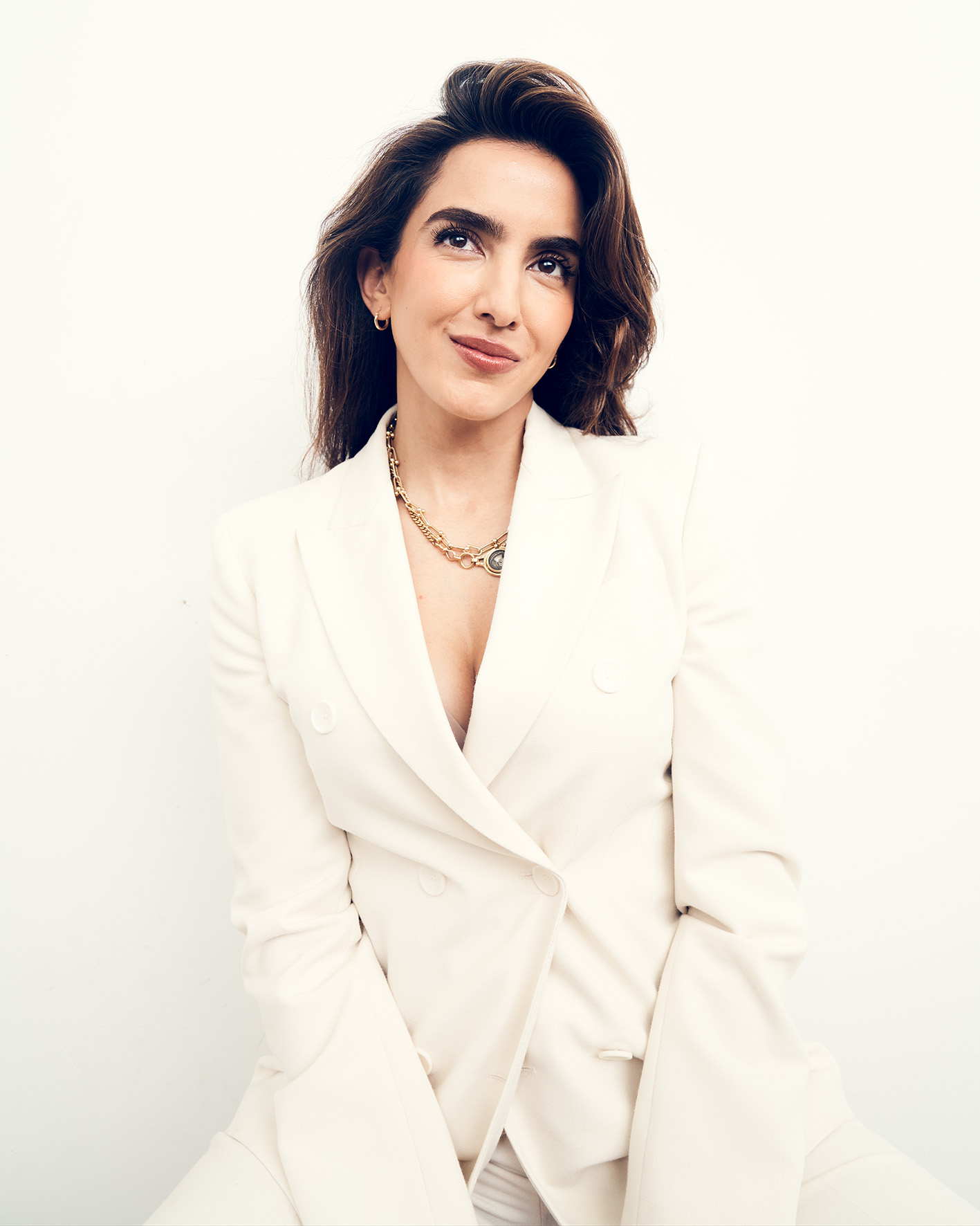
“Most importantly, I want independent, people-led media. An enterprise of thought and discourse spotlighting our best people. With AI and synthetic content rising, independent platforms aren’t a luxury; they’re survival.”
What inspires you now? The renaissance and resistance of the youth, inside and outside Iran. We’ve achieved so much in the socio-cultural realm, even if politically and economically our people are enduring hell. We’re at the end of the beginning: change is not only possible but inevitable.
There’s synergy forming between progressive minds in the diaspora and inside. I watch them, collaborate with them, and I’m in awe. Critical thinking + hope. Tech entrepreneurs backing students. Artists creating film funds. Political minds shaping dialogue into solutions. If you ask what inspires me, it’s them. Youth saying NO to what doesn’t align with their humanity. I love them.
The government’s biggest mistake is underestimating them, the opposition also sidelined them. Their political depth, cultural antenna, technological savviness. They’re unstoppable. Any organized effort that doesn’t enable its youth will be left behind by their grassroots movement. We’re watching fascist structures worldwide get decimated by youth-driven, people-powered uprisings. It’s amazing.
Do you believe everything that happened was good? Regarding recent political events: some good surfaced, some icky truths too. Decades of oppression left scars that spilled all over our media feeds. The real turning point? Realizing that justice isn’t preached, it’s practiced through listening. What we’re starved of is healthy, solution-driven dialogue, everywhere, not just in politics. But social platforms don’t reward humanity; they reward noise. Too many self-serving folks chasing virality over substance (you know the type). And we pay them in the currency of our time: attention. That’s the real danger.
My takeaway? Stay in service of something bigger than myself, and outsmart my very sneaky ego.
VISION
What drives your work and what changes do you hope to see in the world?
What drives me? Refusal to accept cynicism as wisdom, even if it gets me labeled a naïve optimist. And to your second question: I want good impact through great media. Whether as an actor, writer, producer, entrepreneur, or former human-rights lawyer, that’s the engine. The medium changes; the intent doesn’t.
I believe in the power of art, media, cinema, and theatre. If created with nuance and independent vision, they become eternal leverage for good. I love James Baldwin, he says: “ The role of the artist is exactly the same as the role of the lover. If I love you, I have to make you conscious of the things you don’t see”.
I believe artists should take leadership in politics or business. Creative types just tend to lead examined lives, they know enough to know we’re all flawed and biased. Our feeds are full of new-agey preachers, egomaniacs, and capitalistic greed, self-actualization at the expense of the collective whole. We must be conscious of what we’re fed.
Yeats said: “The best lack all conviction, while the worst are full of passionate intensity.” The baddies are louder; the well-intentioned doubt themselves more. The world loses out on their empathy and intellect. I want to change that. I want to give platform to creative, good people doing good. Build spaces, through film, tech, activism, where women and minorities aren’t symbols but sovereign human beings. That’s what drives me.
I became an actor because it ignited the deepest sense of vocation, to engage socially, politically, heart and soul, in the kind of storytelling that helps us understand each other better. When I raised funds for independent films with less-explored stories, it was for their social ROI, because everyone needs to see themselves in a character or a story. That’s how collective healing begins. I spoke on stages and panels for the same reason: to relay a message. I want to keep building on that résumé, it’s a selfish pursuit. And trust me, it hasn’t exactly been financially fruitful.
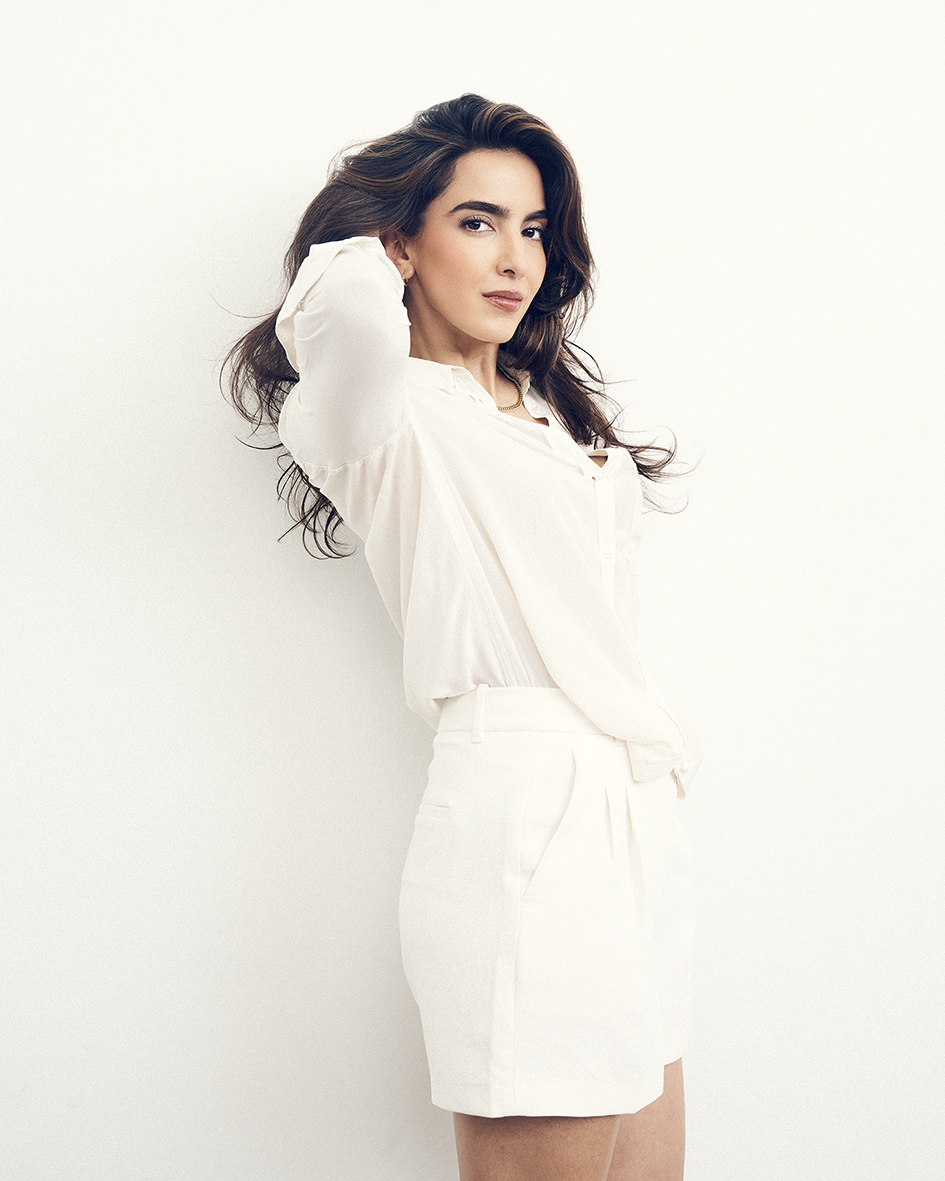
Most importantly, I want independent, people-led media. An enterprise of thought and discourse spotlighting our best people. With AI and synthetic content rising, independent platforms aren’t a luxury; they’re survival.
Is that going to be for the Iranian audience? There isn’t a day I don’t think about creating progressive, independent media for Iranians and even non Iranians but about Iranians, scripted or non-scripted series on impact entrepreneurship, a TV show about girls’ lives, a late-night show with Sara (lol, TBD). I’ve planned these for years, but wrestling with self-doubt. Artists think we shouldn’t start until it’s perfect. I’m saying it publicly to force my own hand. If your readers want to join forces and invest, you know where to find me. Switching the mentality to failing and failing fast instead of waiting for perfection.
CHALLENGES
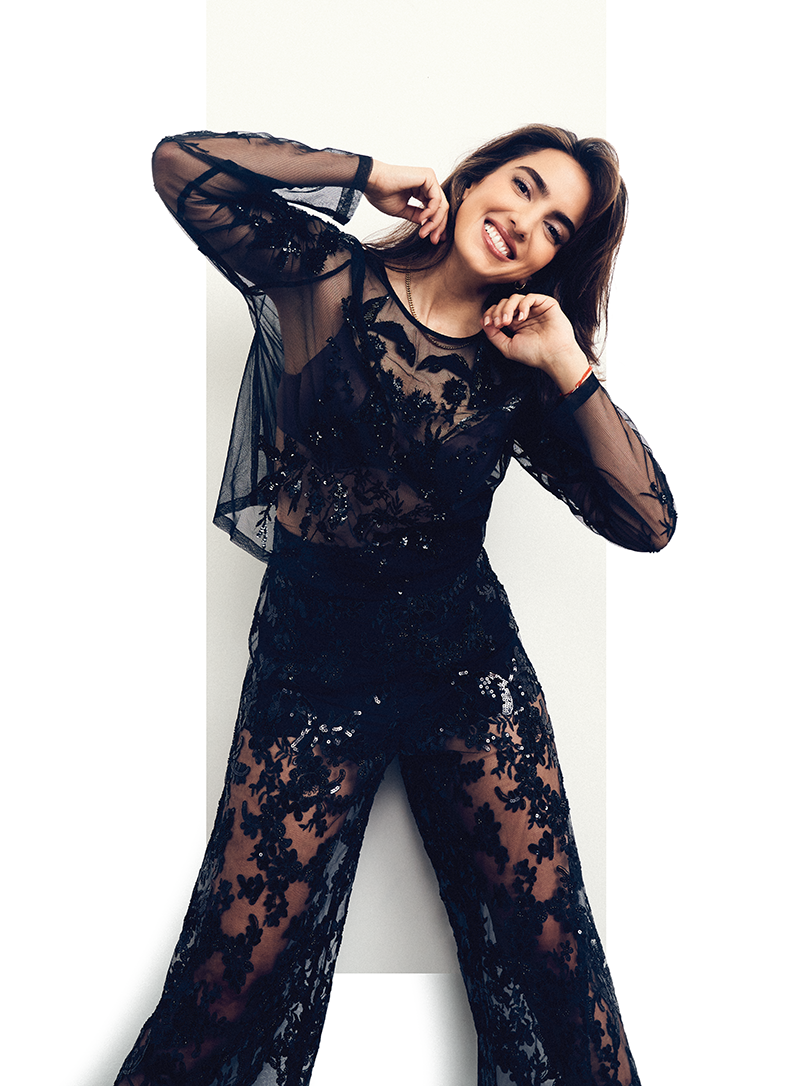
“I’ve only just begun to scratch the surface by finally asking the right questions. Like.. am I getting closer to becoming someone I respect? I believe our answers can only live up to the quality of our questions.”
Can you share a personal challenge you overcame that strengthened your resolve?
In my line of work; film, entrepreneurship, activism, rejection is practically a colleague and results are barely visible. People commend me for achieving a lot in six years of professional film and TV after three gruesome conservatory years, having left behind my home and the life I’d built as a lawyer in London. It doesn’t always feel that way. They don’t see the 99 percent rejections. They don’t see endless rehearsals, fundraising, the best work buried under NDAs and Vimeo links. They don’t see final callbacks where it comes down to you and two others, and the decision lands like a coin toss for reasons you’ll never know. It’s hardly ever about talent.
Toni Morrison explains it best : “If you surrender to the air, you can ride it.” That’s resilience in this business. Maria Popova calls it “the combinatorial nature of creativity”, showing up again and again, stitching failure, luck, and audacity into a life’s work.
The real resilience isn’t in the wins. It’s in loving the process and quietly believing it will all work out, somehow. It’ll either kill you or make you stronger, right? The audacity to stand back up, dust off the rejection, and keep creating, that forges an artistic entrepreneur. I feel like a phony even saying this; I’m an unbearable mess every time rejection comes through. I have a long list of people to apologize to in my Emmy acceptance speech, haha.
The harder part is watching an influx of less-than-amazing content without substance hit platforms, while you’re stuck behind perfectionism and projects expired by it. Artists strive for greatness; nothing is ever good enough to broadcast. A bit of ignorance is the biggest bliss in the creative world, I swear, ignorance about how it’s received. I’m not talking about ignoring the world. If art doesn’t have socio-political commentary, it’s an advertisement for the status quo; it’s not art. And artists with a point of view suffer a double whammy, the daily blows of a volatile craft and the unhealed wound of displacement in this unjust world.
Wow, that was bleak, cue violin soundtrack. Sorry. All that said, I wouldn’t trade being a professional clown for any other job.
IMPACT
What projects or initiatives are you most proud of?
What’s next for you—personally, creatively, and as an advocate?
That’s the kind of self-fulfilling prophecy question I dodge. Ask me again in 40 years. There are projects that filled me with hope but mostly I’m proud of the friendships they made possible. Some of the work I’m proudest of is the work most people don’t know, unwritten chapters that make me smile. Like I met an interesting guy in a film class, a beautiful mind who had overcome addiction many times. Months later he pitched a short about “children of labour”, he only described the opening shot: a young girl and boy hanging from a bin, talking. That image and I was in. With a generous donor’s help, I backed him to buy his camera. He made a stunning short. His name was announced at a local Canadian festival; it made his day. It didn’t go viral. But I know he’ll get there one day. That kind of thing changes you. I can tell you so many stories like this.
I just hope people who I come across in life laugh with pride when they read my eulogy. I’m proud I never went against my ideals, even when it cost me. I’m not here crowdsourcing my conscience. My compass has always been laser-locked on the side of humanity and it won’t waver a degree. I’ve made peace with losing people, projects, prospects if it means standing in integrity. That’s not a loss. That’s alignment.
What about social media? You’ve made quite an impact there. Is that something you intend to leverage? Social media lures you into the illusion of impact, while most of it is noise with nothing tangible on the ground. At the same time, it tricks us into believing our words don’t bear consequences. That’s the paradox. It’s become an algorithmic wasteland. Creators turned into content machines who create for hit virality, meaning is missing. Now they’re promoting synthetic content for mass consumption.
We’re heading toward digital dark ages if creators get wiped out by algorithm roulette or replaced by AI. Where’s the impact, nuance, or trust in that? If humans stop creating, we don’t just lose meaning, we lose the economy built on it. Because once the novelty wears off, there’s no conversion of thought, money, or impact.
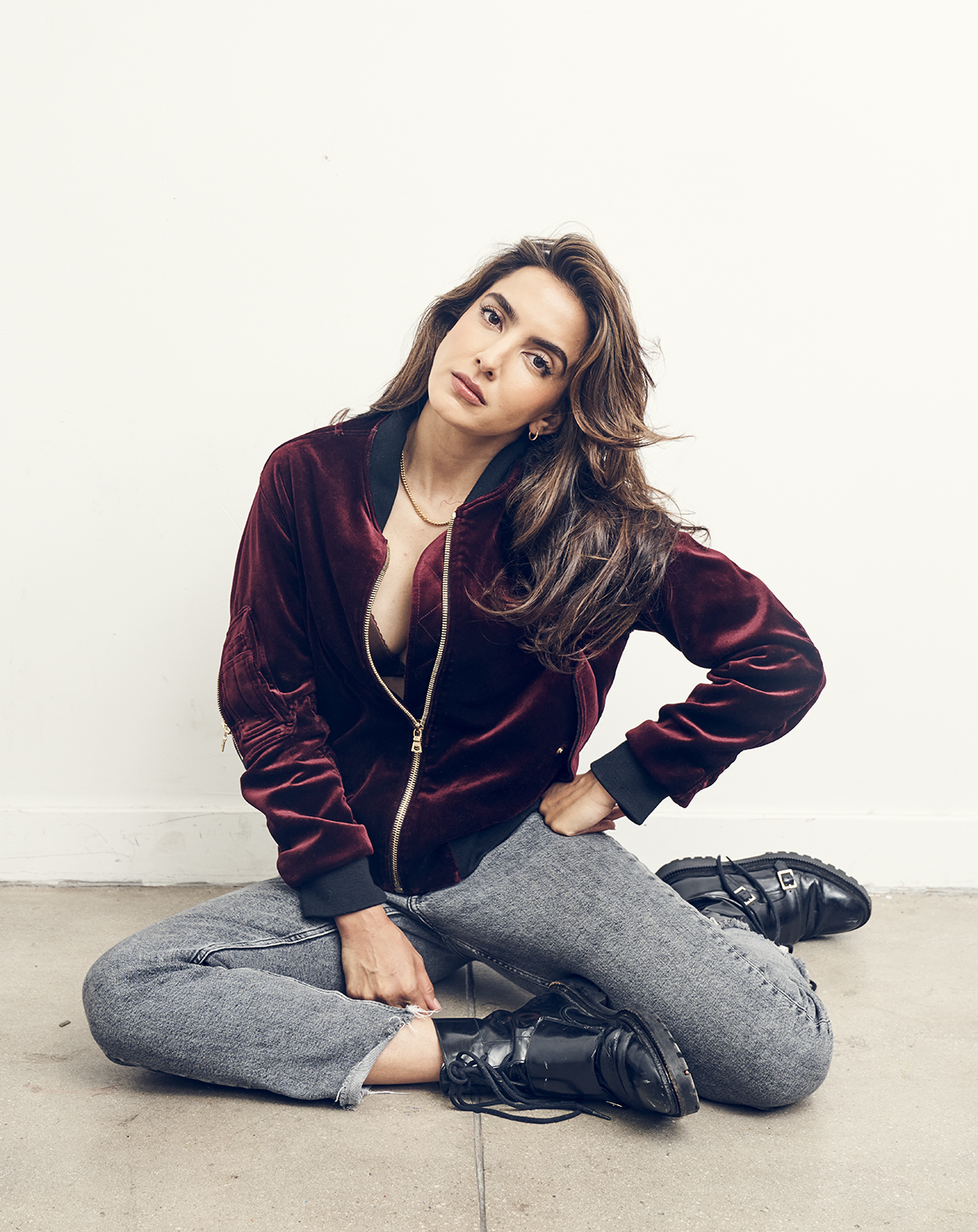
“I’m proud I never went against my ideals, even when it cost me. I’m not here crowdsourcing my conscience. My compass has always been laser-locked on the side of humanity and it won’t waver a degree. I’ve made peace with losing people, projects, prospects if it means standing in integrity. That’s not a loss. That’s alignment.”
The real question isn’t whether AI can create great content. It’s what we lose when it does it for us. We lose meaning. We don’t come into the world pre-labeled with meaning; humans create it out of chaos, joy, and grief. AI can prompt the poetry of heartbreak, but it doesn’t have to live through the consequences. And that is the real existential crisis.. think about it!
That said, if you can navigate the waves of social media, build a personal legacy people trust, and a community who listens, it’s powerful. I haven’t been as active as I wanted myself, it’s a full-time job. but I intend to. It can be a great tool, this social media thing.
It’s been a nerve-wrackingly exciting few years. I never thought years of law, film, TV, and activism would land me here, as a creative tech entrepreneur. But honestly, it feels like I had to wander through two decades of exploration just to get to this point.
Looking ahead, I see two clear paths I’m committed to. The first is about building a global, independent media company, one that highlights and supports the best of our creative force. My dream is to root it in the diaspora and then build real bridges back inside, so it flows both ways.
Second, and most importantly, I’ve spent the last nine months building a project with a small but brilliant team I consider both teachers and colleagues, tackling what I see as the existential crisis of our time: social media. Over 200 million creators drive a $250+ billion creator economy, yet most are trapped in algorithm roulette, burnout, and lack of ownership and only 4% make a living wage. Our mission is to change that, preserving authenticity and trust through a live-first, human-centered platform that puts creators back at the center.
We’re now in our pre-seed round with strong early traction and feedback from creators, advisors, and backers who recognize how urgent this gap is. The goal isn’t just another platform, it’s to set new standards for human-led content creation, where growth and cultural good are aligned.
Invitation is open for everyone to join us.
I used to think becoming meant collecting; degrees, roles, rooms. Now it feels like subtraction: fewer hedges, fewer apologies, the same clean vow. Do work that sees people clearly and refuses to waste their attention. Whatever I build next, on a set, on a stage, inside a product, will be human-first and consequence-aware. Bring your courage. Bring your curiosity. The rest we can learn together.